Concrete and masonry work we handle
- Driveways and approaches, including replacement of cracked or sunken slabs
- Patios, walkways, steps and pool-adjacent flatwork
- Foundations and slabs for additions, ADUs and detached structures
- Retaining walls in concrete, block and other masonry
- Decorative flatwork: broom, exposed aggregate, stamped and colored finishes
What separates a good slab from a cracked one
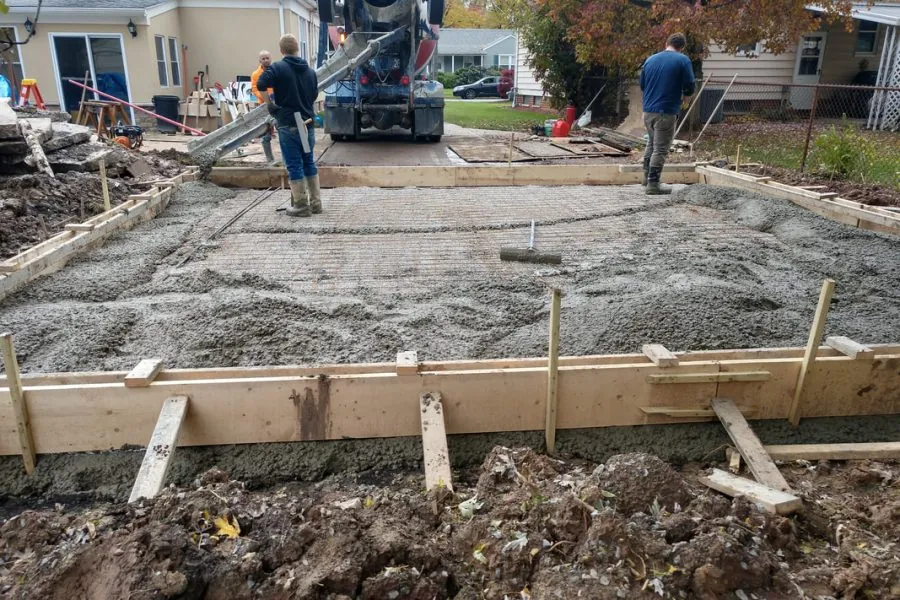
Concrete cracks. The goal is to control where and how much. That comes from decisions made before the truck arrives: removing unstable soil, compacting a proper base, setting forms to the right slope, placing reinforcement, and cutting control joints so shrinkage cracks follow a planned line instead of the middle of your patio.
- Grade and drainage: flatwork should shed water away from the house, not toward it.
- Base preparation: compacted base material under the slab, not just poured on dirt.
- Reinforcement: rebar or mesh sized for the use, heavier for driveways than walkways.
- Jointing and curing: control joints at planned intervals and proper curing so the surface does not dust or scale.
- Finish selection: a texture that suits traction, appearance and maintenance.
Retaining walls and structural concrete
A retaining wall holds back soil, and soil is heavy, especially when saturated. Taller walls and walls supporting a slope, a driveway or a structure typically need engineering and a permit, and the height thresholds vary by city. We plan drainage behind the wall, because water pressure is what pushes most failing walls over.
Foundations for additions and ADUs are coordinated with the structural drawings. If your project involves new footings, we work from the engineer's details so the foundation matches the framing that will sit on it.
Decorative flatwork
Plain gray is not the only option. Broom finishes give traction around pools and steps. Exposed aggregate hides wear and holds up outdoors. Stamped and colored concrete can approximate stone or brick pavers. We will talk through maintenance and cost, since sealing and repair needs differ between finishes.
Removal and replacement
Replacing a driveway starts with demolition and haul-off. Because we also handle grading and demolition, old concrete removal, base correction and the new pour can be planned as one job instead of three vendors.
What to settle before pouring
- Where will water go? Point out downspouts, low spots and neighboring properties.
- Will vehicles, RVs or trailers use the slab? Weight changes thickness and reinforcement.
- Are there trees, irrigation lines or utilities nearby? Roots and buried lines affect layout.
- Does your city or HOA limit driveway width, materials or curb cuts?